European Gasoline Market Faced Severe Tightness in August, Outlook Improving
Europe's gasoline market experienced significant constraints and price volatility last month, driven by a structural blending component deficit, logistical challenges, and refinery output shifts, according to Alkagesta analysis. Prospects for September show signs of easing.
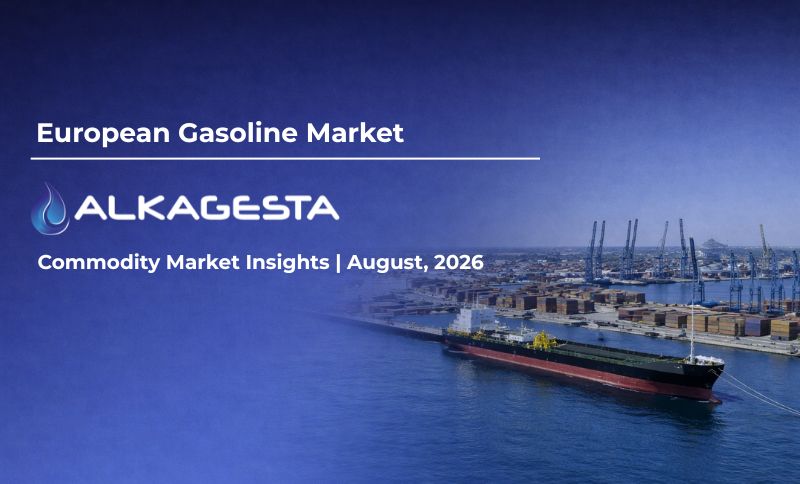
The European physical gasoline market was characterised by acute prompt tightness and steep backwardation throughout August 2026, as reported by commodity analytics firm <a href="https://alkagesta.com/">Alkagesta</a>. This situation arose from a combination of factors, including a structural shortfall of high-octane blending components and historical logistical impediments along the Rhine River. In Northwest Europe (NWE), physical Eurobob E5 barge assessments peaked at $1,141.00/metric tonne on August 21, while the premium for cash-over-M1 swaps reached a substantial $130.50/metric tonne on August 14.
Further supply limitations stemmed from refiners prioritising more profitable middle distillates over lighter products. This strategic shift contributed to a 2.1% year-over-year decrease in cumulative regional gasoline production, which fell to 47.18 million metric tonnes. In Southern Europe, the market remained finely balanced due to unconfirmed refinery operational cutbacks and robust summer tourism demand. This dynamic pushed FOB Med Premium Unleaded cargo prices to $1,186.75/metric tonne on August 21, with the Mediterranean-to-North paper spread reaching a peak premium of $35/metric tonne on August 20, as Alkagesta detailed in its market insights <a href="https://alkagesta.com/european-gasoline-market-outlook-august-2026/">for August 2026</a>.
Transatlantic gasoline export opportunities from NWE to the United States were largely restricted on paper throughout August 2026. Unfavourable paper spreads, specifically the key September RBOB-EBOB differential, assessed at 8.601 cents/gallon on August 12 before declining to 4.484 cents/gallon on August 18 and closing at 3.655 cents/gallon on August 20, effectively closed this arbitrage window. Despite these economic disincentives, physical volumes continued to cross the Atlantic to fulfil existing term agreements. The 30-day export rate of loaded gasoline shipments from Europe to the US increased by 291,000 metric tonnes month-over-month, reaching 907,000 metric tonnes by August 19. Meanwhile, other export routes remained active, with Brazil projected to import 600,534 cubic metres of gasoline in August, primarily sourced from NWE, where the Netherlands accounted for 48% of supplies.
This trend aligns with a related dynamic highlighted by Alkagesta’s naphtha desk in June 2026, where the transatlantic naphtha arbitrage into the US blending and reforming pool widened considerably over the same period. This divergence is attributed to the tight, low-stock gasoline environment drawing naphtha towards US blending demand, even as direct gasoline export economics remained unfavourable.
Within Europe, expanding price differentials led to the reopening of intra-regional shipping routes from NWE refining centres to Mediterranean destinations. The August Med/North paper gasoline spread, representing the premium of FOB Mediterranean cargo swaps over equivalent FOB ARA Eurobob barges, strengthened from $18.75/metric tonne on August 10 to $24/metric tonne on August 11, peaking at $35/metric tonne on August 20. This robust spread made north-to-south cargo movements commercially viable, prompting discussions among traders about redirecting barrels from NWE to alleviate acute physical deficits in Southern Europe, which were exacerbated by unconfirmed regional refinery run reductions.
In Southern Europe, gasoline trade flows significantly contracted as local refiners prioritised domestic supply. Spain’s second-quarter gasoline demand surged by 6% year-over-year to 1.90 million metric tonnes, marking its highest second-quarter consumption since 2003, driven by a strong summer tourism season. Although Spanish refineries increased gasoline output by 28% year-over-year to 2.72 million metric tonnes in the second quarter, retaining these volumes for the domestic market caused Spain’s gasoline exports to plummet by 37% year-over-year to 941,000 metric tonnes. Concurrently, Spanish gasoline net imports contracted by 83% year-over-year to just 119,000 metric tonnes, partly due to the complete cessation of gasoline imports from the United Kingdom.
Alkagesta indicates that the near-term trajectory of the European gasoline market is highly dependent on the recovery of river logistics and the upcoming seasonal specification change. Although Rhine water levels at Kaub rebounded to 73 cm by late August, normal barge operations are expected to lag rainfall recovery by several weeks, maintaining restricted and costly prompt inland product clearing. On the supply side, refiners are anticipated to continue maximising higher-margin middle distillate yields, which is expected to prolong regional gasoline supply tightness and backwardation into early September.
However, market participants foresee greater product availability in the latter half of September. The critical transition to winter-specification gasoline, commencing September 7 for NWE and Mediterranean cargoes and September 16 for barges, will ease summer blending constraints by permitting more flexible, higher-volatility blending parameters. Over the longer term, export flows to the US may gradually recover, with the October transatlantic RBOB-EBOB spread showing improved arbitrage viability at 15.351 cents/gallon, compared to the narrow prompt September spread of 3.655 cents/gallon, according to Alkagesta analysis.
Source and attribution
This article is an original editorial summary written by Core Bulk Trade from reporting published by Alkagesta. It does not reproduce the source text. Facts are limited to those stated in the source material.
Read the original report at Alkagesta
- Source published:
- 27 Aug 2026, 10:32 UTC
- Retrieved:
- 2 Sept 2026, 09:08 UTC
- Verification:
- machine_checked
- Editor approval:
- approved
Editorial note: this summary was drafted with AI assistance from the named source and checked against our AI and content policy. It has not been independently verified beyond the source cited.
Newsletter
Core Bulk Trade — Market & Trade Briefing
A concise briefing on commodity, energy, fuel oil and shipping developments — written for traders, brokers, operators and analysts.