Ukraine’s Resilient Commodity Trade: Adapting Under Duress
Core Bulk Trade examines how commodity trading in Ukraine continues to function amidst ongoing conflict, highlighting the critical role of logistics adaptability, redundant routes, and robust execution capabilities.
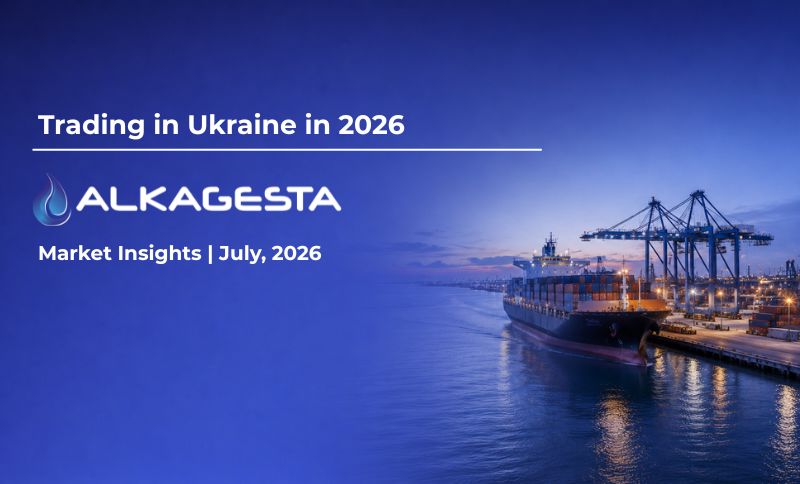
Ukraine has emerged as a crucial nexus for major global commodity flows, encompassing energy, agriculture, and renewable feedstocks. These movements occur within a logistics landscape consistently affected by disruptions to ports, energy infrastructure, and transportation networks. For traders operating in this environment, success hinges on a distinct set of skills: not merely identifying supply, but also proficiently moving, financing, and reliably delivering goods when conditions can shift rapidly, according to insights from <a href="https://alkagesta.com/">Alkagesta</a>. Elchin Aliyev, a Regional Commodity Trader at Alkagesta, has developed this expertise from Kyiv, engaging with petroleum products, biofuels, fertilisers, metals, and steel.
The real narrative of Ukraine's commodity market extends beyond simple flexibility; it's about the market's sustained ability to function, adapt, and execute physical trade despite direct wartime pressures. This characteristic distinguishes it from virtually any other volatile or emerging market globally, as noted in the <a href="https://alkagesta.com/ukraine-commodity-trading-logistics-execution/">Alkagesta report</a>. Ports, terminals, warehouses, energy infrastructure, and transport routes across the nation have endured recurrent missile and drone attacks. In such a context, adaptability means more than just optimising freight costs between rail and barges. It involves maintaining cargo movement through air raid warnings, temporary port closures, damaged infrastructure, navigation restrictions, and sudden route blockages, often with minimal advance notice. Aliyev remarked that by the time prices fluctuate, the logistics framework has typically already changed.
This operational environment has commercial ramifications far beyond logistics. War-risk insurance, vessel availability, banking limitations, and some international partners' hesitancy to engage with Ukrainian exposure fundamentally constrain deal execution, rather than being minor considerations. Counterparty selection directly reflects this reality: reliable execution, banking capacity, and compliance have become primary criteria for business engagement, frequently superseding price. Aliyev explained that while an attractive price grabs attention, dependable execution, banking capabilities, and compliance are usually what secure transactions.
Trade routes have necessarily evolved to be genuinely redundant, moving beyond mere efficiency. Poland remains a vital entry point for rail deliveries, while Romania, Greece, and the Danube corridor are increasingly significant for seaborne supply. The Danube Commission has recognised the corridor's essential role for Ukraine's exports and imports, with active discussions focused on developing it into Europe's initial fully digitalised cross-border transport corridor connecting Ukraine, Romania, and Moldova. This infrastructure is critical not just for efficiency but because a single corridor is rarely dependable enough when ground conditions can change without warning.
Alkagesta's regional operations in Ukraine concentrate on distributing transportation fuels (ULSD 10 PPM) to the Ukrainian market and exporting biofuels, sectors where physical execution risk is a daily operational reality. Concurrently, the firm is investigating opportunities in fertilisers and steel products. European diesel markets have recently tightened, with benchmark crack spreads exceeding $51.25 per barrel, their highest since April, following a significant year-on-year reduction in exports from a key regional supplier in June. This tightness directly impacts Ukraine's fuel market, where diesel costs for agricultural machinery increased over 22% during spring, intensifying pressure on a sowing season already strained by damaged domestic production capacity and import disruptions.
Despite the challenging operating conditions, the structural opportunity in biofuels is expanding. Ukraine exported biomethane to the EU for the first time in 2025, a landmark event that the IEA identified as opening avenues to scale domestic low-emissions gas production. The IEA noted that biomethane's decentralised production model lessens its vulnerability to the infrastructure disruptions that have affected centralised energy supplies during the conflict. As of March 2026, seven biomethane plants were operational in Ukraine, with five more projected to come online by year-end, spurring new trading flows in vegetable oils, animal fats, and other renewable fuel feedstocks. Aliyev observes a growing link between traditional energy markets and renewable feedstocks, noting that the distinction is blurring, creating new trading prospects across both sectors.
The fertiliser market illustrates a similar pattern of adaptation under pressure. Ukraine imported 1.483 million tonnes of mineral fertilisers in the first four months of 2026 alone, with Poland, Romania, and Germany becoming primary supply origins after a significant shift in sourcing. This import surge occurred against severe cost pressures: the Ukrainian Agribusiness Club warned in March that domestic ammonium nitrate output had halved due to attacks on energy infrastructure, while ammonium nitrate import prices rose 37% year-on-year and urea by 43%. A potential 15-20% harvest shortfall was flagged if the resulting supply gap remained unaddressed. Financing and reliably delivering into this gap, amidst damaged infrastructure and constrained maritime import options, demands the type of multi-commodity capability and European supply chain depth Alkagesta has developed. Metals and steel are also emerging as further areas of activity as regional trade gradually stabilises.
A unifying principle across all these commodities in Ukraine is that execution capability outweighs price. This isn't a preference but a necessity, as price becomes irrelevant if a deal cannot be physically delivered. Aliyev stresses that parties outside the region often undervalue optionality, stating that in Ukraine's current market, having multiple reliable logistics routes can be more valuable than negotiating an additional dollar per tonne. This optionality is not a commercial refinement but an operational imperative in a market where a single route, port, or counterparty relationship can be disrupted without warning. Every transaction is viewed not as a standalone deal but as interconnected with international supply chains, regional logistics, financing, and global market dynamics. Aliyev posits that successful trading begins with a fundamental question: Can this deal actually be executed? Only then is the commercial aspect optimised. In a market where freight availability, banking channels, war-risk insurance, and documentation frequently impact deal success more than price, this sequencing is the only viable approach.
The successful traders in Ukraine are not necessarily those with the best initial price. Alkagesta highlights that they are individuals who remain closely connected to the market, communicate effectively with all involved parties, and adapt swiftly while maintaining control over execution. What distinguishes trading here from most other volatile markets globally is that this adaptability is exercised under continuous, direct pressure, yet the market has continued to operate, as detailed by Alkagesta's insights.
Source and attribution
This article is an original editorial summary written by Core Bulk Trade from reporting published by Alkagesta. It does not reproduce the source text. Facts are limited to those stated in the source material.
Read the original report at Alkagesta
- Source published:
- 22 Jul 2026, 12:28 UTC
- Retrieved:
- 2 Sept 2026, 09:09 UTC
- Verification:
- machine_checked
- Editor approval:
- approved
Editorial note: this summary was drafted with AI assistance from the named source and checked against our AI and content policy. It has not been independently verified beyond the source cited.
Newsletter
Core Bulk Trade — Market & Trade Briefing
A concise briefing on commodity, energy, fuel oil and shipping developments — written for traders, brokers, operators and analysts.