Hormuz Disruption Signals Enduring Challenges for Global Fertilizer Market
The global fertilizer market continues to grapple with severe supply chain vulnerabilities, with renewed disruptions in the Strait of Hormuz highlighting ongoing instability and the need for enhanced resilience, according to Alkagesta.
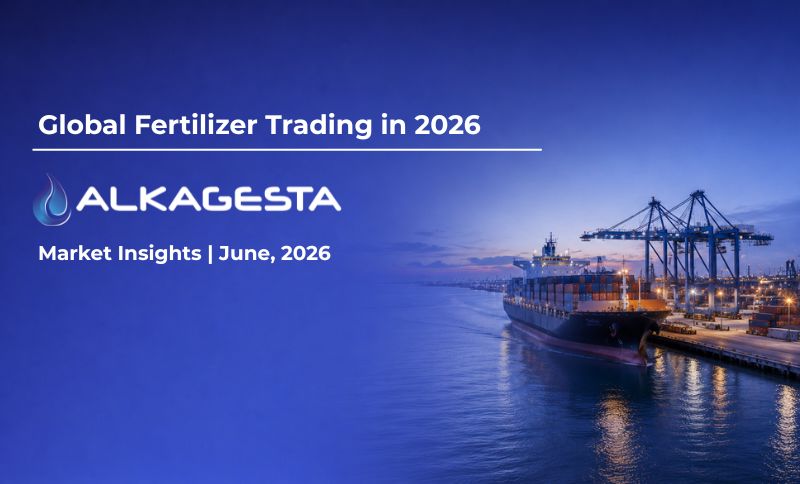
The international fertilizer sector is currently navigating one of its most intricate phases in recent memory. A series of initial geopolitical shocks to energy and shipping networks has progressed into a protracted structural examination of the entire agricultural supply chain, with the situation remaining unresolved as of June 2026.
Following a brief period of apparent recovery after the US-Iran peace agreement, the Strait of Hormuz has experienced a significant downturn. Iran's Islamic Revolutionary Guard Corps (IRGC) declared the waterway closed on June 21, responding to Israeli strikes in Lebanon. Ship tracking data indicated a sharp reduction in transits, falling from 35 vessels on Saturday to just 12 on Sunday, as reported by <a href="https://alkagesta.com/fertilizer-supply-chain-disruption-hormuz-2026/">analysis from Alkagesta</a>.
This crisis has starkly revealed the inherent fragility of a global fertilizer supply chain that was intensely optimised for efficiency, leaving it with minimal capacity for disruption. Roughly one-third of all internationally traded fertilizers pass through the Strait of Hormuz, converging at this single chokepoint with virtually no built-in redundancy. Previous disruptions saw urea prices escalate beyond $800 per tonne FOB Egypt, force majeure clauses invoked on contracts once considered unshakeable, and producers in South Asia reducing output due to tighter Qatari gas supplies.
Even the temporary reopening that followed the June 14 US-Iran accord failed to restore normal shipping volumes. At its peak, tanker transits reached only 25 vessels on June 19, a figure substantially below the pre-conflict average of over 100 daily transits, before the IRGC re-declared the closure days later. This incident has underscored a critical lesson learned from the initial disruption: re-establishing physical supply routes is a gradual process, not an immediate event, and the market should not anticipate a swift return to normal operations.
The ramifications of this disruption extend far beyond fertilizer logistics. During the 181st Session of the FAO Council, FAO Director-General Qu Dongyu emphasised that the closure of the Strait is not merely a regional concern but poses a global food security risk, given that 20–30% of worldwide fertilizer exports traverse this vital passage. Subsequently, G7 agriculture ministers convened an extraordinary session to coordinate strategies for supply diversification and market transparency. Vusal Muradov, Lead of the Fertilizer Desk at <a href="https://alkagesta.com/">Alkagesta</a>, noted in a recent analysis that businesses capable of maintaining consistent, quality supply through these bottlenecks and tense regions are no longer niche operators, but rather essential components of global infrastructure.
In the current climate, ensuring the timely delivery of the correct product to the appropriate location has become as commercially vital as price discovery. Fertilizer demand is highly seasonal, meaning a missed delivery window can jeopardise an entire growing season. Alkagesta's desk manages this intricacy across product specifications, storage, port infrastructure, inland logistics, and multi-jurisdictional regulatory requirements, while also closely monitoring energy and ammonia markets due to their direct impact on the economics of nitrogen fertilizer production.
Present market signals suggest anything but stability. The brief reopening of the Strait following the June 14 agreement, and its subsequent rapid closure days later, unequivocally demonstrates that the market should not factor in a quick return to pre-conflict operating conditions. For fertilizer buyers and traders, the implications are considerable. Planting seasons do not await the conclusion of geopolitical negotiations, and the supply chains serving them cannot be rebuilt overnight, even if shipping lanes were to reopen. Companies best positioned to navigate this period are those that cultivated depth in sourcing relationships, logistical flexibility, and execution capability prior to the disruption, rather than merely in response to it, according to Alkagesta's assessment.
Source and attribution
This article is an original editorial summary written by Core Bulk Trade from reporting published by Alkagesta. It does not reproduce the source text. Facts are limited to those stated in the source material.
Read the original report at Alkagesta
- Source published:
- 24 Jun 2026, 07:22 UTC
- Retrieved:
- 2 Sept 2026, 09:10 UTC
- Verification:
- machine_checked
- Editor approval:
- approved
Editorial note: this summary was drafted with AI assistance from the named source and checked against our AI and content policy. It has not been independently verified beyond the source cited.
Newsletter
Core Bulk Trade — Market & Trade Briefing
A concise briefing on commodity, energy, fuel oil and shipping developments — written for traders, brokers, operators and analysts.